
Why retinal imaging matters for people with diabetes
Diabetes-related vision issues often have few early warning signs. Luckily, a thorough eye exam may spot these problems early and protect vision long-term.
There are about 40 million Americans living with diabetes.1 Diabetes affects how the body controls blood sugar (or glucose). This can cause too much sugar to build up in the blood. Over time, high blood sugar can harm many parts of the body, including the eyes.2
This is why regular eye exams are an important part of diabetes care.
But people with diabetes may need more than a standard eye exam. They may also need special types of retinal imaging. Learn what retinal imaging is, what it can do and how it can help protect vision.
How diabetes affects the eyes
High blood sugar can eventually damage the tiny blood vessels in the retina. This is the thin layer of tissue in the back of the eye. And that can lead to complications and eye diseases.3
One of the most common eye conditions linked to diabetes is diabetic retinopathy. This happens when high blood sugar damages the blood vessels in the retina. These blood vessels can swell and leak fluid, which can affect vision. 3
Diabetes can raise the risk of other serious eye conditions, too. These include:3
- Diabetic macular edema
- Cataracts
- Glaucoma
In early stages, many of these conditions often have no symptoms.3 That’s why retinal imaging is so important when people are first diagnosed with diabetes.
Stay on top of diabetic eye care with an in-network provider. Find a provider now.
What is retinal imaging?
Retinal imaging is a group of tests that take detailed pictures of the retina. These images help eye care providers see changes that may not be visible during a standard eye exam.
One common test is fundus photography which takes a standard photo of the retina to detect any changes. More advanced fundus photography uses widefield digital images to capture all parts of the retina.
Another is called optical coherence tomography, or OCT. This test uses light to take pictures of the back of the eye. It helps the eye care provider see the layers of the retina and check for swelling or fluid. 4
An OCT can also take pictures of the macula and the optic nerve. The macula helps the eyes see fine details. And the optic nerve sends messages from the eye to the brain. This helps an eye care provider check for other eye problems linked to diabetes, like macular edema, which is swelling in the macula.
Another test is fluorescein angiography. A yellow dye is injected through an IV in the arm. Then, a special camera takes pictures as the dye moves through blood vessels. This allows the eye care provider to see how well blood is flowing through those tiny veins and find leaks or blockages.4
All of these tests show digital images that the eye care provider can compare with previous images. That way, they can spot any changes from year to year.6

The easiest way to stock up on contacts
Find dailies, monthlies, extended wear and more, from all the top brands.
Who should get retinal imaging?
Most people with diabetes should have a comprehensive eye exam at least once a year.5 The eye exam will include dilation and, often, retinal imaging.
- People with type 1 diabetes usually start eye exams within 5 years of diagnosis.
- People with type 2 diabetes should begin screening at the time of diagnosis. This is because the condition may have been present for years without symptoms.5
What to expect during testing
Retinal imaging tests are usually quick and painless. In many cases, eye drops are used to widen the pupils. This helps an eye care provider get a better view of the retina. Vision may be blurry for a few hours after the exam.7
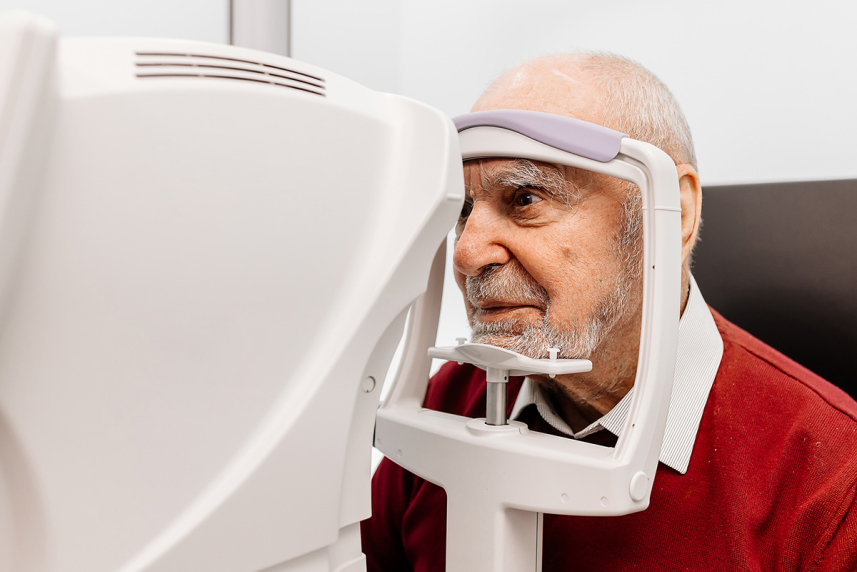
For the Fundus Photography and OCT: A person sits in front of the camera with their chin on a rest and their forehead against a support bar. The camera scans the back of the eye and takes pictures for a few minutes.7
For fluorescein angiography: The dye given through the IV may cause mild side effects, like feeling warm or a little nauseous. These effects usually go away quickly. The test takes about 30 minutes.7
Regular eye care is essential when living with diabetes. Search for an eye care provider now.
Why early detection matters
Finding eye diseases early can make a big difference. Treatment works best before people begin to have symptoms.
In its early stages, diabetic retinopathy can often be managed with blood sugar control and regular monitoring.3
If the disease gets worse, other treatments may be needed, such as: 3
- Eye injections
- Laser therapy
- Surgery
These treatments can’t undo the damage. But they can stop vision from becoming worse.3
Regular retinal imaging helps eye care providers see changes in the eyes over time. It keeps a clear record of eye health and helps guide treatment. This can help people get better care and protect their vision for longer.
Tips to protect eye health
In addition to regular eye exams, it’s a good idea for people with diabetes to do the following:8
- Manage blood sugar levels
- Get physically active
- Keep their blood pressure and cholesterol in a healthy range
- Quit smoking, if that hasn’t happened already
For people with diabetes, regular eye checks are an important way to stay healthy. Finding problems early, getting care on time and managing the condition can help protect eyesight for many years.
Sources:
- National Diabetes Statistics Report Centers for Disease Control and Prevention, January 21, 2026
- Diabetes Basics Centers for Disease Control and Prevention, January 2, 2026
- Diabetic Retinopathy National Eye Institute, September 11, 2025
- Diabetic Retinopathy American Society of Retinal Specialists
- Diabetes and Your Eyes: Getting Started American Diabetes Association
- Use of artificial intelligence with retinal imaging in screening for diabetes-associated complications: systematic review eClinical Medicine, March 2025
- Health Library: Retinal imaging New York Presbyterian
- Eye Health American Diabetes Association