
3 everyday reasons non-prescription lenses make sense — and how vision benefits can help cover them
Even without a prescription, lenses can protect eyes from screens, sun and hazards. Here’s how they work and how benefits may help pay for them.

There are all sorts of reasons to wear eyeglasses. Most people wear them with corrective lenses to fix a refractive error. Refractive errors are a type of vision problem, like near- or farsightedness. An eye care provider writes a prescription for special lenses to correct the problem.1
Even those folks with clear eyesight can benefit from wearing lenses, though. These lenses are typically non-prescription ones that people can order online or buy at a drugstore. They’re also known as over-the-counter eyewear.
It’s important to understand what these lenses do and when they come in handy. Then learn how vision benefit coverage may make it easier to choose the right non-prescription protection.
What are non-prescription lenses?
Non-prescription lenses typically do not correct vision. (The exception? Over-the-counter reading glasses.) Instead, they are made to protect the eyes or improve comfort in certain situations.2
Sometimes the lenses include coatings or filters that reduce glare. Sometimes they’re made of special shatterproof materials. The most common non-prescription lenses include sunglasses, safety or sports glasses and glasses made for the computer.2
Here is a look at 3 types that people might need in their daily lives.
Check to see if your UnitedHealthcare vision plan covers non-prescription eyewear here.
1. Eyeglasses to reduce eye strain
Spending hours staring at screens is a part of everyday life now. Digital devices, whether phones, tablets or laptops, all give off blue light. This is a type of high-energy visible light.
Blue light is strong. Too much time spent on screens can lead to eye strain. And that can cause dry eyes, headaches and blurred vision.3 But it’s not known whether the blue light from these digital devices is making eye strain worse. Or even triggering it in the first place.3
Being exposed to blue light too close to bedtime can also impact sleep.4 That’s because blue light could interfere with the hormone that makes people feel drowsy.
To help, people can get blue light eyeglasses. These non-prescription lenses are designed to filter blue light, which could help with eye strain.2 Or they can get computer glasses with yellow-tinted lenses that also help filter out blue light.5
There are other ways to deal with eye strain that don’t require special eyewear. People can use a filter on their devices. Or keep their eyes lubricated with artificial tears.3
UnitedHealthcare Vision members can save up to 30% on digital device screen protectors and $25 on blue-light filtering eyewear from Eyesafe® Eyewear. Learn more here.
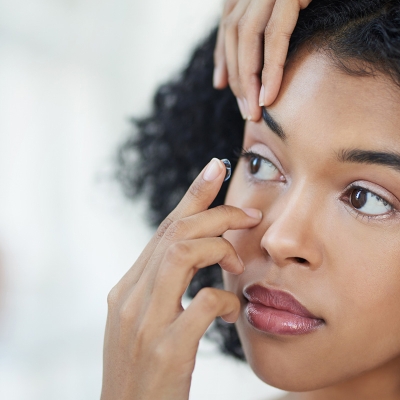
The easiest way to stock up on contacts
Find dailies, monthlies, extended wear and more, from all the top brands.
2. Sunglasses to protect from UV rays
Sunlight can be harmful to the eyes. UV rays can raise the risk of cataracts and other eye conditions over time if people’s eyes aren’t protected.6
The best lenses block 100% of UV rays. Make sure the lenses say that, or are labeled “UV absorption up to 400nm.”7 Other features to look for include: 6, 7
- Wraparound frames, which can protect eyes from all angles
- Polycarbonate lenses that offer UV protection
- Polarized or darker (black or gray) lenses, which block glare
UV protection is important year-round, not just during summer or on sunny days. UV rays can get reflected off sand, snow and water. So it’s a good idea for people to wear sunglasses whenever they’re outdoors.7
Ready for a new pair of sunglasses? Start shopping today.
3. Safety or sports glasses
Some types of jobs can raise the chances of eye injuries. These include jobs like construction, manufacturing or auto repair. People who work in labs or as healthcare workers can also be at risk of eye injuries.
Safety glasses and goggles can protect the eyes from chemical burns and splashes. They can also protect them from injuries caused by objects, like metal shards, concrete or particles.7
Non-prescriptive safety glasses are made of stronger material than regular eyeglasses. That way, they don’t shatter if something hits them. Look for a Z87 mark on the lens or frames. That shows that glasses meet the standards of the American National Standards Institute.7
Other features include side shields or wraparound styles. Lenses made of polycarbonate are strongest.
Special safety glasses can be worn during sports too. These lenses can be tinted to reduce sun exposure and glare. Make sure the lenses are impact resistant.8
How vision benefits may help
Vision benefits are not only for prescription glasses. Some UnitedHealthcare Vision plans offer coverage for non-prescription eyewear.
Some plans also cover, or offer discounts on, coatings such as anti-reflective or UV protection. Coverage can vary, so reviewing plan details is important.
Using available benefits can make it more affordable to get high-quality lenses that can protect eyesight.
Of course, vision benefits can also include no-cost eye exams. Those are also important for protecting vision, whether a person needs prescription or non-prescription lenses.
Sources:
- Refractive Errors. National Eye Institute, December 19, 2025
- Over-the-Counter Eyewear: What You Can Buy Without a Prescription The Vision Council Foundation
- The Digital Distress of Blue Light and Its Effects on Your Eyes Cleveland Clinic, June 5, 2025
- Blue Light: What It Is and How It Affects Sleep Sleep Foundation, July 21, 2025
- Blue Light and Your Eyes Prevent Blindness
- Over-the-Counter Sunglasses The Vision Council Foundation
- Scoping Out Sunglasses UMass Memorial Health
- Protecting your eyes at work American Optometric Association
- Help patients keep their eye on the ball—and safe from injury American Optometric Association